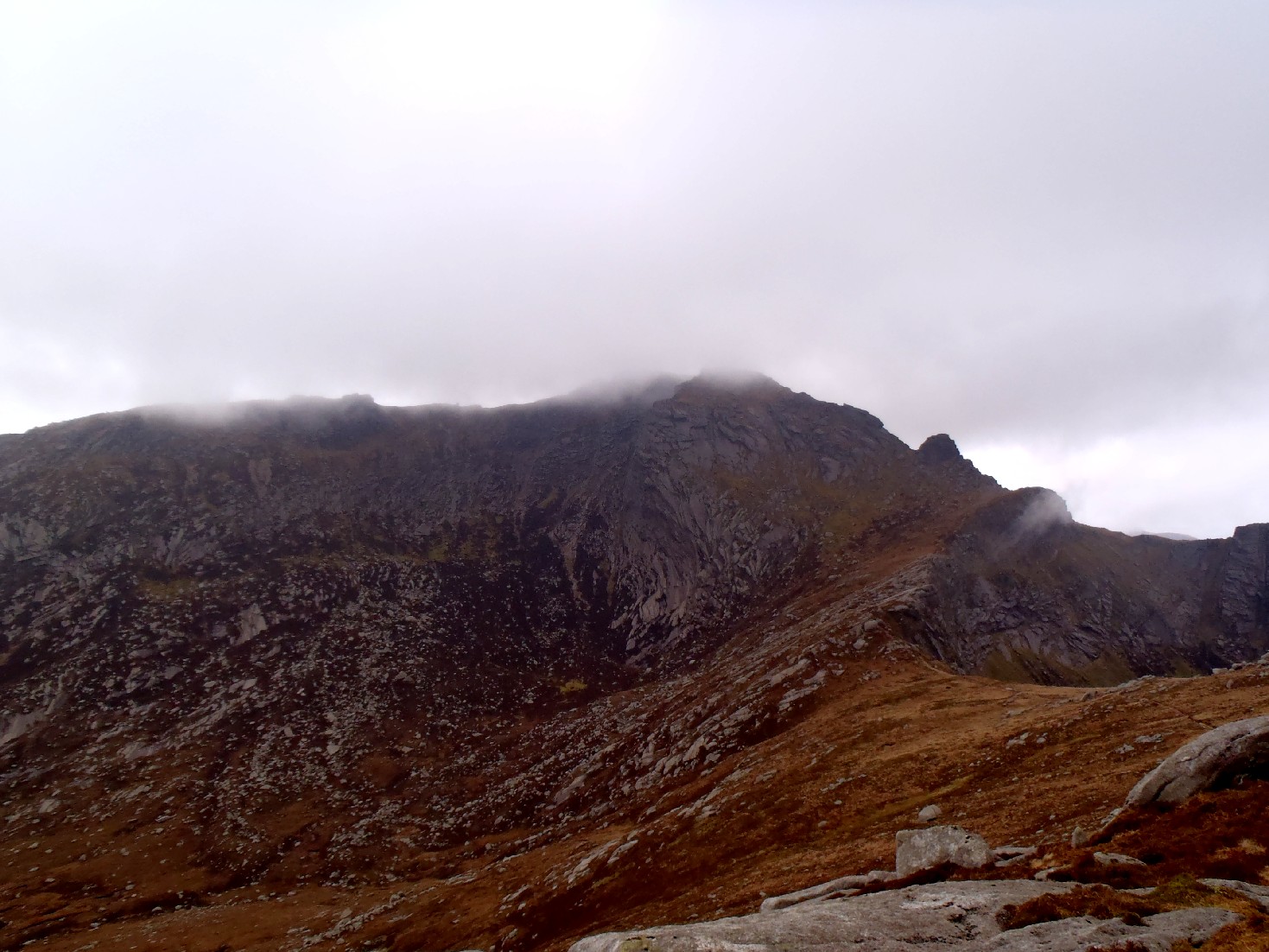
Beinn Alligin, with the Horns on the left.
Sunday, 1 April 2012
The Horns of Alligin
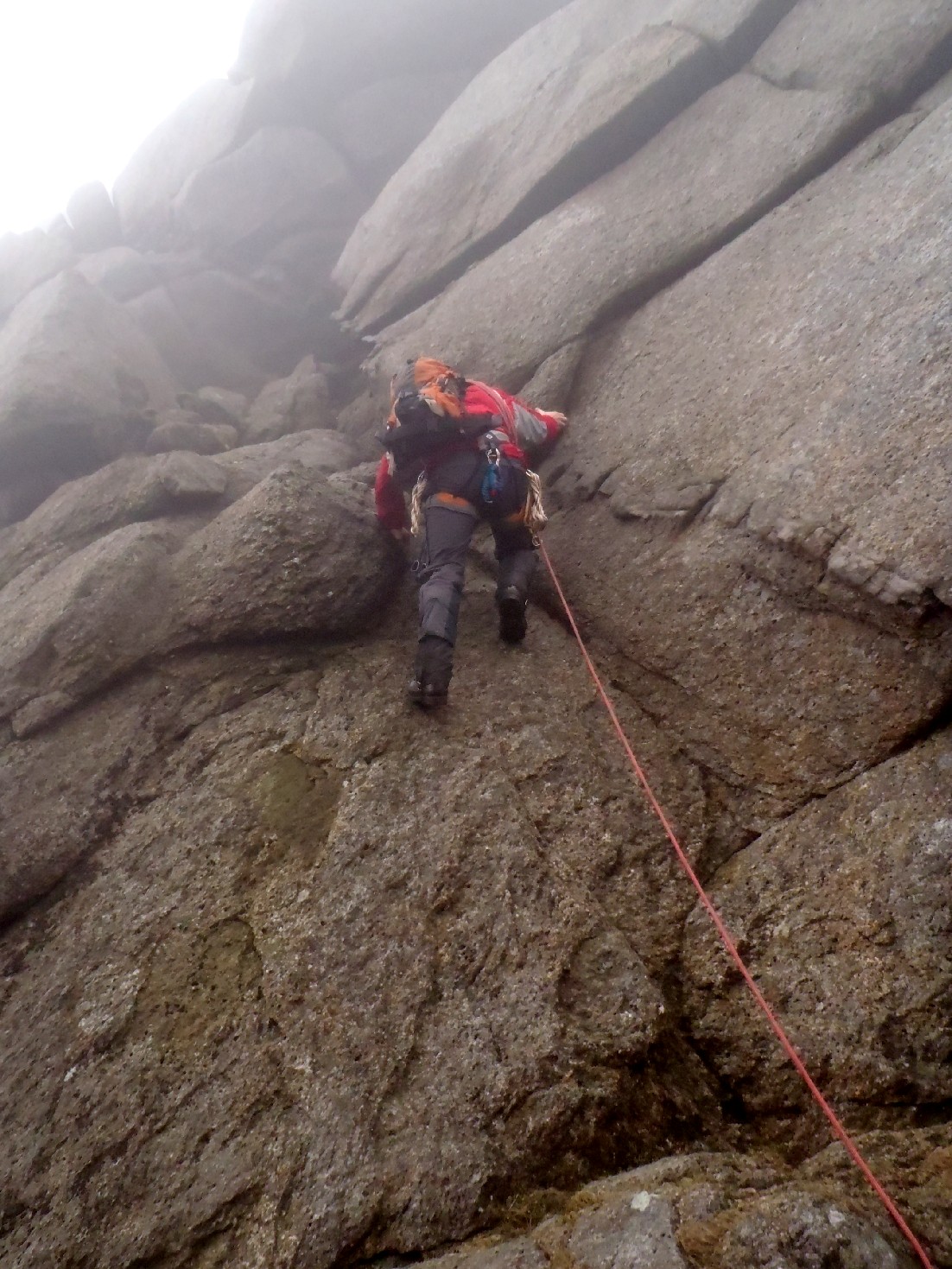
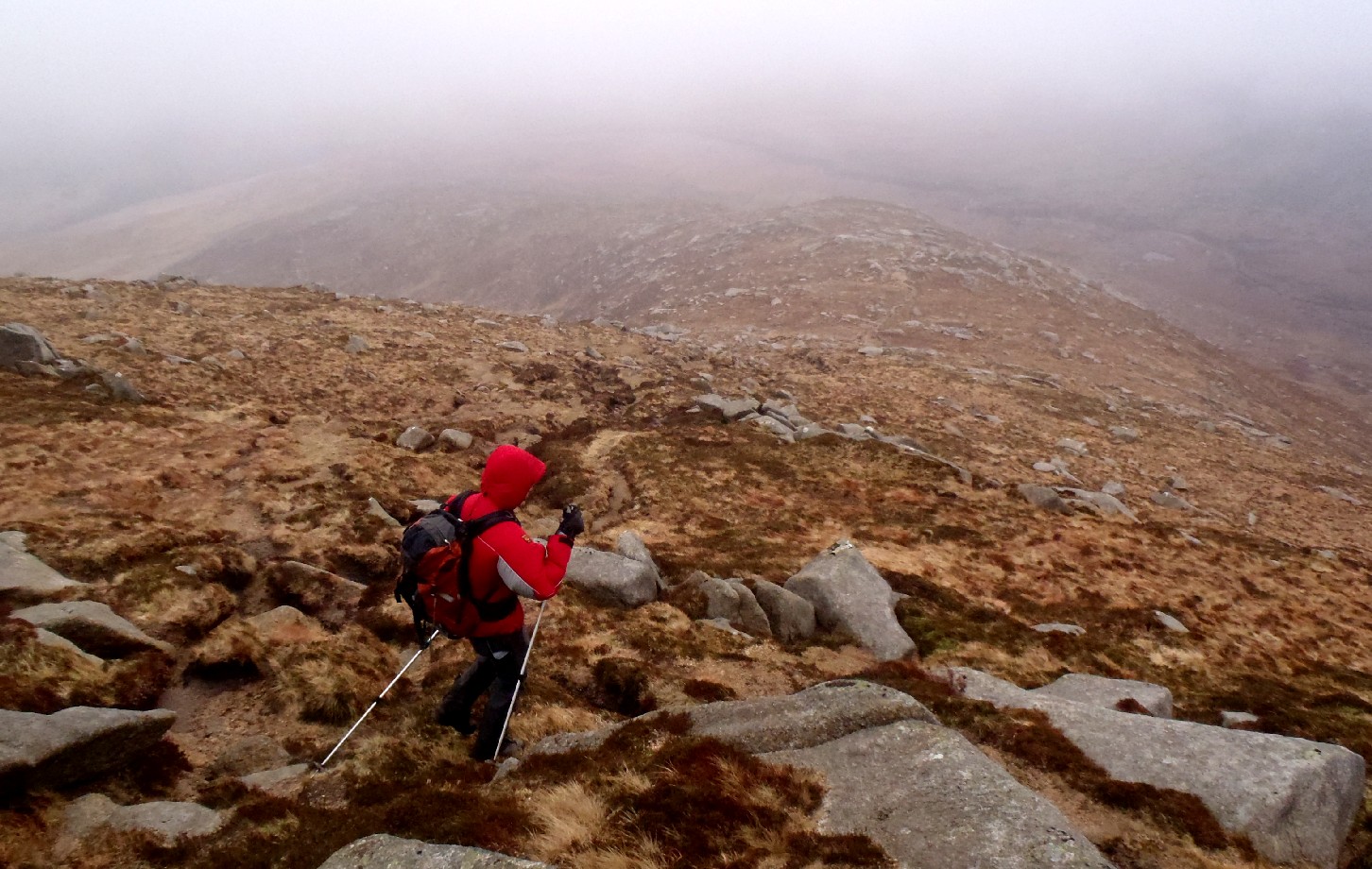
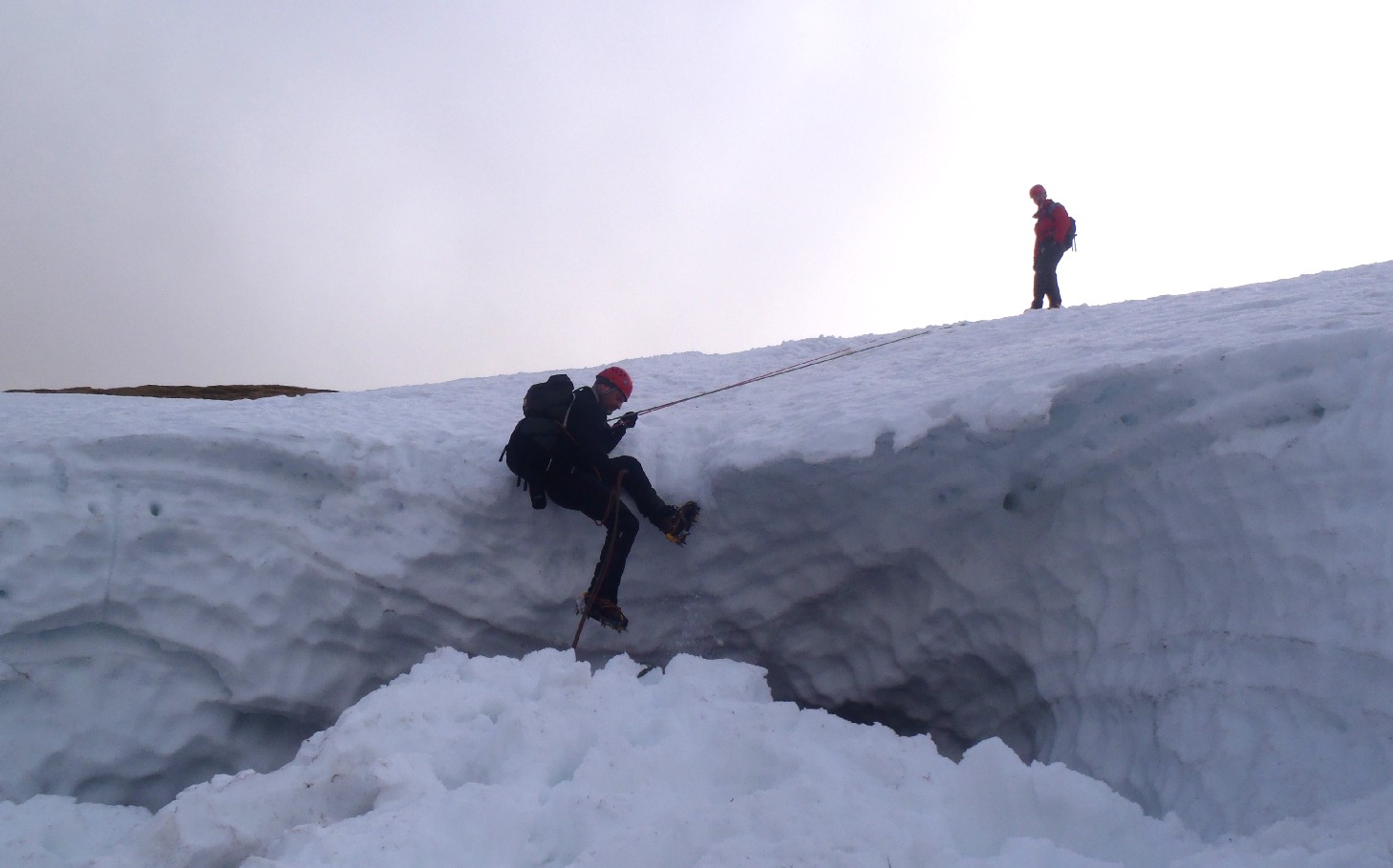
Continuing the catch-up theme, here are some pictures from our traverse of Beinn Alligin on Wednesday. This was first visit to the Torridon area for a long while, an a new mountain for me. Beinn Alligin is an absolute stunner, and for nervous scramblers, the horns, while spectacular, are not that difficult. In fact I'd say I found them to be easy and fun, unlike the look of the teeny traverse path that avoids the difficulties, which appeared to be pretty scary. Be bold- take the bull by the horns and climb them direct!
Gardyloo (oooooooh) Gully
I'm playing catch up a bit with this post and probably the next couple as I've not been in to update as much as I would like. On Monday last we were heading in to Ben Nevis on a rumour that there may still be some wintry stuff to be found high up. What followed was a classic Ben spring day, with plenty of helpings of fun (good), falling ice (bad), and a lovely late finish in daylight (just).
Looking up in to Coire na Ciste from the CIC hut. Already roasting hot.
We headed up in to Observatory Gully for a look at Gardyloo. There were a few parties about, including teams on Tower Scoop which looked really thin, and lots of activity on the great ridges.
Observatory Gully, leading to Gardyloo on the left, and Tower Gully on the right. The thin dribble of ice down and right of Tower Gully is tower scoop.
The initial pitches of Gardyloo were straightforward grade 1 on good snow. However, two pitches in, a party abseiled in to the top of the gully above us, and proceded to lead some necky and fragile grade V ice on the left wall. It made entertaining and impressive viewing, which was a good thing, as it pinned us down for some time, hiding from the large lumps that were hurtling in to the gully regularly. In the end we had to wait for them to finish as it was nuts to proceed into the shooting alley while they were on it.No matter, it was a gorgeous day, with plenty of daylight, and the best climbing for us was still to come.
Gardyloo chockstone tunnel pitch.
The penultimate pitch of Gardyloo has a big chockstone, which often has an icy tunnel behind it, which is how we found it. It was the strangest ice climbing I have ever done, and I found the bridging both funny and hard work, as I tried not to get flushed down the U Bend.
Yep, I'm giggling.
From the tunnel, it wasn't far to the top, and a mellow bask in warm sunshine surrounded by walkers in shorts and T shirts. From there, we prolonged the day a bit by heading back down over the Carn Mor Dearg Arete, in a leisurely fashion, and lingered to enjoy a magnificent sunset just before we dropped below the treeline above the North Face Carpark.
The CMD Arete was bare of snow.
A magic end to a magic day.
Tuesday, 20 March 2012
Three Beinns and a Short Eared Owl
The forecast today was for mizzly wetness and strong winds, and at first it looked like this promise would be fulfilled. I met Garry Fraser from Scots Magazine bright and early in Brodick, with a plan to get up high in the mountains and enjoy some of Arran's best hillwalking. We picked the Three Beinns as our objective, one of my favourite ridge walks and I was sure that even in the damp weather, Gary would not be disappointed.
Looking down Glen Rosa from the path the climbs steeply alongside the Garbh Allt to Coire a Bhradain
The route takes an early escape from Glen Rosa alongside the Garbh Allt and climbs through a deer exclosure that protects native trees in the gorge from nibbling. Higher up we crossed the bog, and then the Garbh Allt, to take a path that strikes out towards the toe of the first Beinn, Beinn Nuis. Our big wildlife sighting of the day appeared at this point, a short eared owl that reared up out of the heather in front of us. We had a wonderful view of this day flying bird of prey, as it flapped away over the moor.
The wreckage of a B24D Liberator near the summit of Beinn Nuis.
It wasn't long before we were in the mist, high on the slopes of Beinn Nuis. Shortly before the summit we took a brief detour to visit the site of a crashed B24D Liberator, which met its end on the western flank of the mountain on route to Prestwick from Newfoundland in August 1943. Sadly all 10 of the American servicemen on board perished in the crash.
Beyond the summit, the ridge undulates, until a final pull up on to the second of the Beinns, Beinn Tarsuinn. From here there is a steep and badly eroded descent to the bealach by the bowmans pass, where it is possible to descend further towards Beinn a Chliabhain to the south.
The mist began to clear as we neared the summit of Beinn a Chliabhainn
At last with the clearing weather we were able to look back towards Beinn Tarsuinn and the route we had traveled.
Looking back towards Cir Mhor at the head of Glen Rosa. The summit of Beinn a Chliabhain is in the foreground and in the far distance the ridge of the Sleeping Warrior.
The cloud finally clears from the summit of Beinn Nuis as seen across Coire a Bhradain
Looking south towards Brodick Bay, with Holy Isle peeping out in the far distance.
Finally, back down in Glen Rosa, the famous view of Cir Mhor at the top of the glen.
With the lifting weather, our spirits lifted, and it is a brilliant ridge walk in all conditions. By the time we were back down in Glen Rosa it was positively balmy and springlike.
Thursday, 15 March 2012
Boing!
Spring has sprung and I'm bouncing back from the disappointment of an early end to winter and making the most of the new season. Yesterday Wally and I felt inspired to take the rope for a walk and have a look at the state of the rock at the top end of Glen Rosa. It was a damp dull cold day, with an icy wind, so we avoided the pitched climbing and went for a poke around on Achir. On the way up we were treated to a flypast by a golden eagle- flying low over the heather, and our heads at the top end of Glen Rosa. Magic!
The Rosa Pinnacle on Cir Mhor skimmed with cloud.
Side view of the Rosa Pinnacle, showing the slabs of the classic climb Souwester Slabs (VDiff). South Ridge Direct (VS 5b) more or less follows the skyline.
Looking down Glen Rosa
Wally scrambling on Achir. The weather deteriorated and as the green rock began to drip we retraced our steps from the trench under the Mauvais Pas and rethought our plans in to a walking day!
We took the traverse path that avoids the difficulties on Achir to the north side, and then through the Bowmans pass and over Beinn a Chliabhain. Here Wally emerges from the mist on Beinn a Chliabhain.
Tuesday, 13 March 2012
Change of season...change of plan...
I'm supposed to be on my Winter Mountain Leader Assesment this week. Right now I should be descending to the minibus, somewhere in the Cairngorms, after a long mountain journey day putting all the elements I've been training for in to practice. I'd probably be mulling over packing my rucksack this evening for a 3 day expedition, when my skills as a winter leader would be put to their biggest test yet.
Not this week.
I arrived at Glenmore Lodge on Sunday night, and was warned straight away that conditions were looking sketchy for the assessment. The recent thaw has been brutal, and the forecast was unfolding in to an unseasonably mild week. It was an agonising night- for candidates and no doubt assessors too, as they wrestled with weather forecasts, diminishing options, and a need to uphold the integrity of the award. In the end the sad news was broken to us after breakfast. There could be no Winter ML assessment taking place at Glenmore Lodge this week. I think everyone, including the assessors, was pretty devastated by the decision, but I believe it to have been the best one they could make. To reach the end of the assessment and be deferred because they had not seen enough of us in full winter conditions would be an even worse fate. Passing us without testing us properly is not an option.
We were offered a day of coaching with Alan Halewood, an MIC who delivers a lot of the winter programme at the Lodge, and the opportunity to transfer to next year. Four of us spent a very valuable day with Alan in Coire an Lochain looking at skills progression and polishing the tools in our steep ground tool box until they were much, much shinier. We got some great feedback (none of us produced any howlers) and we all went away having learned something and improved our skills. I should feel completely deflated after all of this, but in fact I'm totally psyched for a summer on rock and in my kayak, and then back in to the gnarl as soon as the first snows of winter arrive. I'm looking forward to it already!
Dry warm rock in Lochain- the rock climbing season has begun.
Some old icebergs still bobbing around in the lochain.
Buckets, buried axes and steep ground.
"South African" style abseil over an overhang. Ouch!!
Alan Halewood has also put some nice pictures from our day in Lochain on his blog: http://alanhalewood.blogspot.com/2012/03/disappointment.html
Wednesday, 7 March 2012
Stob Coire Nan Lochan, Glencoe
The countdown to my Winter ML assessment is on, and although I don't want to say too much about it at this stage, you can look forward to a frank post mortem after the event. However, regular readers this winter will have spotted in my blog some references to QMDs (Quality Mountain Days), insane night nav missions, persistence in digging bucket seats on easy ground, tying the rope around my waist, and not climbing anything harder than grade 1 for the entire season. Its been a frustrating winter, and I'm pretty anxious about it all, as better leaders than me have not passed first time, but I've worked hard at my prep and now I must wait to get the dreaded thing over with.
Yesterday was my last chance to practice my skills among friends, and my mate Hazel kindly agreed to play at being my client for the day. We met in Glencoe the night before, planning an early start to try and beat an impending thaw and associated weather. The early start paid off, and when we arrived at the base of Broad Gully, Stob Coire nan Lochan, the ground was still frozen and the winds light.
We roped up at the base and proceeded to pitch the gully old school style. The old snow was rock hard and digging buckets was warm work. Hazel had a wee go as well and lead her first winter pitch (nice one!). We made slower progress than I'd hoped however, and the weather began to appear. Higher up the gully, fresh snow and spindrift were blowing in. I had a brown trousers moment at one point when I looked around me to see rivers of loose snow literally flowing past me on either side down the gully. Fortunately, it was only a small section of the gully that was in this poor state and I took a good spike belay on the side of Dorsal, brought Hazel up, and found that not far above the snow condition improved with little of the loose stuff to bother us.
Yesterday was my last chance to practice my skills among friends, and my mate Hazel kindly agreed to play at being my client for the day. We met in Glencoe the night before, planning an early start to try and beat an impending thaw and associated weather. The early start paid off, and when we arrived at the base of Broad Gully, Stob Coire nan Lochan, the ground was still frozen and the winds light.
Stob Coire nan Lochan first thing. Broad Gully is the shallow rightward slanting gully between the black summit buttresses and the small triangular buttress (Dorsal Arete).
The snow conditions seemed pretty good at this point, although there was a thin layer of poorly bonded fluffy stuff that was overlying old hard neve, it wasn't deep and could easily be kicked through. We hoped to top out before the thaw, and associated wet snow instabilities predicted by the SAIS.
We had cracking views across Glencoe to the Aonach Eagach and even the summit of Ben Nevis was out of the cloud for a bit
Hazel having fun in Broad Gully
We topped out as the weather deteriorated and the snow turned to rain. It wasn't as windy as predicted, but a few ferocious gusts warned us to hurry up and descend. Once down in the shelter of the coire again it was possible to relax and take a leisurely walk out.
Big changes happening in the mild misty rain when we returned to the coire, fresh snow was melting and older snow turning to soup.
There were a few parties about as well as ours, doing winter skills courses and digging industriously in the rain. I hope the weather improves for them this week (and stacks up some nice conditions for me next week...).
Friday, 2 March 2012
Walking on the Wild Side: The White Room
This article from a series of articles published in the Voice for Arran, a community magazine for Arran.
There is no doubt about it,
white-outs in the mountains are scary, but they are not dangerous on their own
if your navigation skills are up to scratch.
Navigating in a white-out on the summit of Ben Nevis. Image credit: Stuart Wallace
In the White Room there is nothing.
You can blink, strain your eyes and try to shake the dizziness from your head
but the blank screen in front of you will not flicker. Looking down at your rime encrusted compass
you watch the needle settle on North and take a few stumbling steps forward on
a surface that your eyes don’t register. Your quads pump. Your legs at least
tell you that you are walking uphill. Ahead, a scrap of windblown lichen
tumbles across the snow and helps your own internal compass to settle.
Being the navigator on point in a “white-out” is a lonely business. You
can turn to look at your friends in bewilderment who will in turn offer words
of encouragement, but while they have your reassuring footprints and rucksack
to look at, they can’t fully comprehend the dizzying vertigo that comes from seeing
nothing. The experience goes from bizarre to hellish
when strong winds and stinging spindrift are added to the mix. A cocktail of
agony and blindness only slightly eased with ski goggles (now you enter the
marginally cosier “Pink Room”).
To experience the true White Room you need a thick blanket of snow,
removing any sign of surface details. All rocks, blades of grass and footprints
are erased and the horizon mingles freely with atmospheric mist and snow. It is
impossible even to see which way the ground dips, and I’ve seen people rolling
snowballs out in front of them just to judge the gradient before they step on
it. The disorientation of navigating in a full white-out can lead to compelling
urges to lie down on the floor to confirm that gravity and the earth still
exist.
Knowing how to navigate in Scotland’s mountains at
any time of year is very important, as our weather is so changeable and bad
visibility or lack of concentration can easily lead to route finding
errors. In winter, white out conditions
make navigation exceptionally difficult and the stakes are increased with more
hazards and greater consequences for mistakes.
There is no doubt about it, white-outs are scary, but they are not
dangerous on their own if you know how to deal with them when they overtake
you, and practice your micro-navigation skills regularly so that when you need
them they are right there at your fingertips.
Learn how to walk on a
bearing. Sighting on objects such as rocks or tufts of heather just in front of
you will work in summer and even in the dark, but in the White Room you have
nothing to sight on so will have to take it really steady. Try sending people
out in front of you and using the compass to sight on the line ahead rather
than staring blankly in to the mist. You can also turn around and take a back
bearing along your snowy footprints to check how well you are doing.
Calculate the distance you
have travelled using timing. Calculate
your speed, and add about a minute for every 10m vertical height gained. If you
can’t do the maths with a cold brain, try laminating a little cheat card with
timing calculations already worked out for everything from 100-1000m, and at 2,
3, 4 and 5km per hour, and attach your cheat card to your compass.
Count every pace. Pace counting is very useful for distances
under 500m. Experienced navigators know how many paces they take when walking
for 100m on easy ground. Usually each
double pace is counted, for example, every time the left foot hits the ground. Experience
helps you learn how many extra paces to add in deep snow, uphill or with a
heavy pack.
Avoid Hazards. Avoid cliff
edges, gullies and steep ground. These
are often concealed by deep snow and cornices, and could be invisible in a
white-out.
Don’t skimp on equipment: A map, a spare, a
compass, a head torch and ski goggles are essential winter equipment, and
should be included along with your ice axe and crampons.
If you are new to navigation, you may wish to start with a book to
introduce the basics- there are lots of great ones on the market, but my
favourite is a small publication called Mountain
Navigation, by Peter Cliff, which
has been in print for a while but is still widely available. There is also no
substitute for practical experience, and while the winter days are claggy and
dreich, there is certainly plenty of that to be had on Arran’s hills!
Subscribe to:
Posts (Atom)